
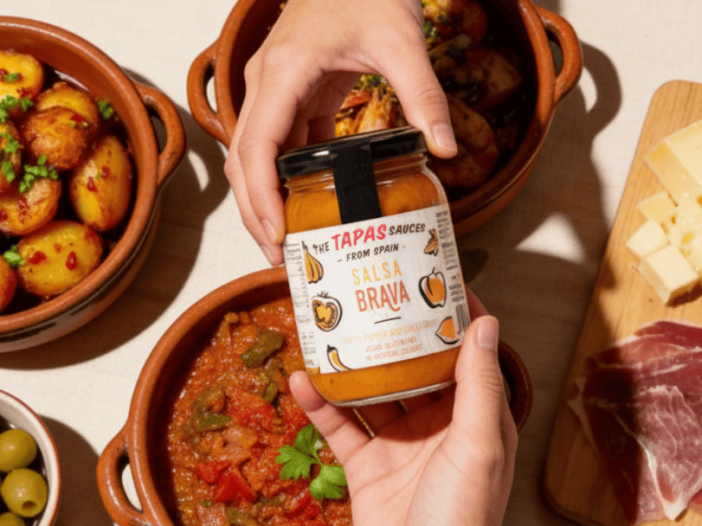
Unlike many international hot sauces that rely heavily on fresh chili peppers or vinegar, authentic Spanish Salsa Brava gets its heat, deep flavor, and iconic red color from a staple of the Spanish pantry: Pimentón (smoked paprika).
The word brava translates to “brave” or “fierce”—a nod to the fact that it’s one of the very few truly spicy elements in traditional Spanish cuisine. However, Spanish spiciness is sophisticated; it’s not meant to burn your palate, but rather to warm it up and make you crave the next bite.
While recipes vary depending on the region (and every chef guards their secret formula with their life), a traditional Salsa Brava is built on a base of:
- Pimentón de la Vera: A mix of sweet (dulce) and spicy (picante) smoked paprika.
- Olive Oil and Flour: Used to create a roux that gives the sauce its velvety, thick texture.
- Broth: Usually a rich meat or vegetable stock to add depth.
The Great Debate: In Madrid, the authentic sauce contains no tomatoes at all—the redness comes purely from the paprika. However, in Catalonia and other Mediterranean regions, chefs often add a base of slow-cooked tomatoes or serve it side-by-side with a dollop of creamy garlic alioli for a beautiful contrast of flavors.
The Story: Born in the Bars of Madrid
The origin of Salsa Brava takes us back to the mid-20th century, specifically to the 1950s and 60s in the heart of Madrid.
Two legendary, traditional bars —Casa Pellico and La Casona (both now sadly closed)—are widely credited with inventing the dish. They began serving cheap, fried potato chunks topped with a secret, spicy sauce to accompany a cold beer or a glass of wine.
The snack was an instant hit. It was affordable, incredibly satisfying, and the spicy kick of the sauce made customers order more drinks. Soon, queues formed around the block with locals eager to try these “fierce potatoes.”
By 1967, the popularity of Patatas Bravas was so immense that journalists and food critics began writing about them as a cultural phenomenon. From Madrid, the recipe spread like wildfire across the country, with each region adapting the sauce to their local taste.
How to Enjoy Salsa Brava Like a Local
While Patatas Bravas is the ultimate pairing, this versatile sauce is a fantastic weapon to have in your kitchen for everyday meals. You can use it to add an instant Spanish twist to:
- Grilled Meats: Brush it over chicken skewers (pinchos morunos) or pork loin.
- Roasted Veggies: Drizzle it over baked cauliflower, broccoli, or sweet potatoes.
- The Ultimate Dip: Mix it with a bit of mayonnaise or serve it next to alioli for a “two-sauce” dipping experience with chips or bread.
Bring the Spanish Bar Experience Home
Making an authentic Salsa Brava from scratch requires slow-cooking, balancing the perfect ratio of sweet and spicy paprika, and making sure the flour doesn’t clump.
If you want to skip the stovetop drama but keep 100% of the authentic flavor, The Tapas Sauces has done the hard work for you. Our Salsa Brava is crafted using traditional Spanish methods, delivering that perfect, velvety texture and balanced spicy kick.
Just fry or roast some potatoes, open a jar, and boom—you’re instantly transported to a sunny terrace in Spain.